
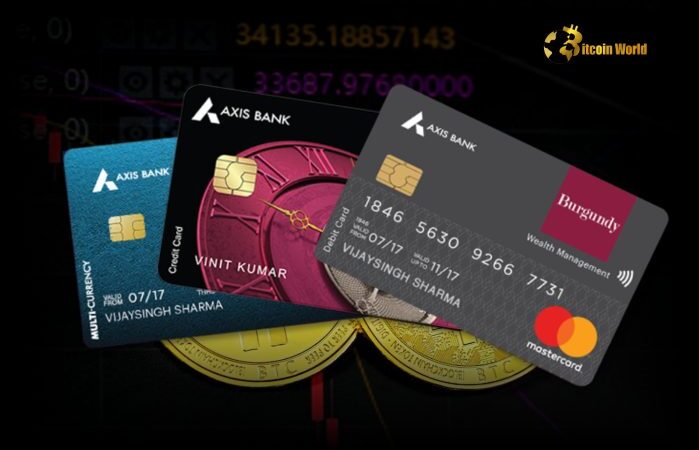
- 1. What Is a Forex Card and Why Do Students Use It?
- Why students prefer Forex Cards:
- 2. Types of Axis Bank Forex Cards
- 1. Multi-Currency Forex Card
- 2. World Traveller Forex Card (Miles & More)
- 3. Contactless Forex Cards
- 3. Key Features for International Students
- ✔ Fixed Exchange Rate
- ✔ Globally Accepted
- ✔ Multi-currency convenience
- ✔ Emergency Assistance
- ✔ Reload Anytime
- ✔ Better safety than cash
- 4. Eligibility Requirements
- 5. Fees and Charges (Typical Range)
- 6. Pros and Cons for Students
- ✔ Pros
- ✘ Cons
- 7. Smart Tips for Using a Forex Card Abroad
- 1. Load currency when exchange rates are favorable.
- 2. Avoid Dynamic Currency Conversion (DCC).
- 3. Keep your backup card separate.
- 4. Track spending through the Axis mobile app.
- 5. Test the card before departing.
- 6. Avoid frequent small ATM withdrawals.
- 8. Is the Axis Bank Forex Card Good for Students?
- 9. Final Verdict
Axis Bank Forex Card for Students: Complete Guide (2025 Edition)
Studying abroad is more common than ever, and one major challenge international students face is managing money overseas safely and cost-effectively. A Forex card — especially the Axis Bank Forex Card — has become a preferred solution for students who want to avoid high conversion fees, unpredictable exchange rates, and the inconvenience of carrying cash.
This guide explains everything students need to know about the Axis Bank Forex Card: features, benefits, fees, eligibility, and practical usage tips while studying abroad.
A Forex Card is a prepaid travel card loaded with foreign currency. It works like a debit card abroad — for payments, online transactions, and ATM withdrawals.
- Fixed exchange rate at the time of loading (no future fluctuations).
- Safer than carrying cash.
- Globally accepted across ATMs, POS terminals, and online merchants.
- Parents can reload the card remotely from home.
- Multi-currency support for students traveling across countries.
- Works well for tuition fees, rent, daily expenses, and online subscriptions.
Axis Bank offers several Forex card options suitable for international students:
- Supports up to 16 currencies (USD, EUR, GBP, CAD, AUD, JPY, etc.).
- Ideal for students studying or traveling to multiple countries.
- Offers protection against currency volatility.
- Designed for frequent travelers.
- Earns Lufthansa Miles & More reward points.
- Suitable for students who travel frequently within Europe or internationally.
- Tap-and-pay functionality.
- Faster and more convenient for everyday student spending.
Load money once → Spend later at the same locked-in rate, unaffected by market fluctuations.
Use the card in:
- ATM withdrawals
- Supermarkets
- Restaurants
- Public transport
- Online payments (subscriptions, university portals)
Load multiple currencies and switch between countries without conversion charges.
If the card is lost:
- Instant blocking
- Free replacement card delivered abroad
- Emergency cash assistance (in selected locations)
Parents can top-up the card instantly through Axis Bank online banking.
Chip-and-PIN protected, plus 24/7 fraud monitoring.
Students can apply if they meet these criteria:
- Possess a valid passport
- Hold a student visa or admission letter
- Provide travel details (flight ticket may be required)
- Basic KYC (Know Your Customer) documents
- In many cases, an Axis Bank Savings Account is required to issue the card
Note: Requirements may differ based on country of residence or the issuing branch.
Actual fees may vary by country or issuing branch.
| Fee Type | Typical Range |
|---|---|
| Issuance Fee | USD $3–$10 (INR 300–750 equivalent) |
| Reload Fee | USD $1–$3 |
| ATM Withdrawal Fee | USD $2–$3 per withdrawal |
| Balance Enquiry | USD $0.50–$1 |
| Cross-currency Markup | Around 3.5% |
| Replacement Card | Often free in emergencies |
Students should check the latest schedule of charges before applying.
- Fixed exchange rates → no surprises.
- Easy to manage expenses abroad.
- Safer than cash; backup card provided.
- Multi-currency support for international travel.
- Ideal for tuition payments, rent, books, and daily spending.
- Parents can reload instantly from home.
- Some merchants or websites may not accept prepaid cards.
- Fees may apply for ATM withdrawals or cross-currency use.
- Unused balance must be encashed later (may take time).
- Must load funds in advance, requiring budgeting.
Lock in rates before big fluctuations.
Always choose to pay in local currency, not your home currency.
Axis provides a replacement card in your kit — carry it safely.
Stay aware of your balance and transactions.
Make a small purchase or ATM withdrawal before leaving your home country.
Withdraw larger amounts to reduce per-transaction fees.
Yes — it is one of the best options for international students, thanks to its safety features, global acceptance, multi-currency flexibility, and parent-friendly reload options.
It is ideal for students studying in:
- USA
- Canada
- UK
- Europe
- Australia
- Japan
- UAE
- Singapore
- Any region where foreign currency expenses are required
The Axis Bank Forex Card offers a secure, convenient, and cost-efficient solution for international students managing finances abroad. With multi-currency support, fixed exchange rates, easy reloads, and global acceptance, it helps students focus on what truly matters: their education and overseas experience.
comment