
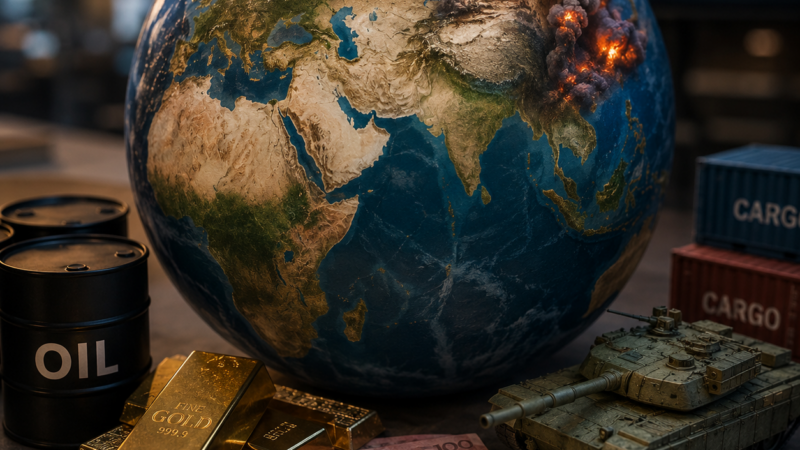
The world is currently experiencing a period of heightened geopolitical instability, with global economic growth being constrained by armed conflicts and trade tensions. The most significant flashpoint is the Middle East conflict (involving Iran, Israel, and the United States), which has disrupted energy supplies and raised concerns about a potential closure of the Strait of Hormuz. This could drive crude oil prices significantly higher (Brent crude is projected to reach around USD 90–94 per barrel, or even higher under a worst-case scenario).
Key factors include:
- Conflict and Geopolitical Risks: The Middle East conflict is disrupting supply chains and increasing inflationary pressures. Under President Trump, the United States is pursuing a more assertive “America First” agenda, including actions related to Venezuela, statements regarding Greenland, and the implementation of broad tariffs. U.S.-China relations remain characterized by “competition without decoupling,” with ongoing tensions over tariffs and technology restrictions. Europe faces mild recessionary pressures and growing security concerns.
- Slowing Global Growth: Major institutions forecast global GDP growth of only 2.5–3.1% in 2026, below pre-pandemic levels, with downside risks outweighing upside potential. Emerging and developing economies are expected to suffer more severely due to energy import dependence and elevated debt burdens.
- Inflation and Monetary Policy: Rising energy prices are pushing global inflation higher (approximately 4%), forcing central banks to remain cautious about interest rate cuts. Artificial intelligence and technological innovation provide positive momentum by supporting productivity and investment, but they are not yet sufficient to fully offset geopolitical and economic shocks.
- Other Structural Trends: Trade fragmentation (deglobalization), rising public debt, increasing social polarization, and climate change continue to pose long-term risks to global stability.
Overall, 2026 appears to be a “tipping point” year, marked by the gradual decline of traditional U.S. global leadership and the emergence of a more fragmented and unpredictable multipolar world order.
The current global environment creates a landscape of high volatility, elevated risk, and selective opportunities.

1. Equities and Risk Assets
- Financial markets remain highly sensitive to geopolitical developments.
- Technology and AI-related stocks continue to be bright spots due to substantial investments from hyperscalers such as Microsoft, Google, and Amazon. However, elevated valuations increase the risk of corrections.
- Energy, defense, and commodity sectors are benefiting from higher oil prices and growing security-related spending.
2. Interest Rates and Bonds
- Persistent inflation may force the Federal Reserve and other central banks to delay interest rate cuts or even tighten policy further.
- Government bonds, particularly U.S. Treasuries, continue to serve as relative safe havens, although rising public debt levels increase long-term risks.
3. Foreign Exchange and Commodities
- The U.S. dollar may strengthen due to its safe-haven status and supportive domestic policies.
- Gold, oil, and certain precious metals remain attractive hedges against inflation and geopolitical uncertainty.
- Emerging-market currencies face heightened depreciation risks.
4. International Investment and Supply Chains
- Companies are increasingly pursuing diversification strategies, including friend-shoring and near-shoring, to reduce exposure to tariffs and supply chain disruptions.
- Countries such as those in Southeast Asia, as well as India and Mexico, may benefit as alternative manufacturing and investment destinations to China.
- Credit risks are rising in highly indebted economies, especially those dependent on energy imports.
- Diversify allocations: Increase exposure to commodities, energy, AI-related investments, and defense sectors while maintaining cash reserves or safe-haven assets during periods of uncertainty.
- Strengthen risk management: Utilize hedging strategies (including derivatives where appropriate) and closely monitor developments in the Middle East and U.S. policy decisions.
- Maintain a medium-term perspective: AI remains a powerful long-term growth trend and could support economic recovery once geopolitical tensions ease.
The world is currently navigating a period of “promise and pressure”—significant technological potential alongside substantial geopolitical and energy-related challenges. Financial markets in 2026 require a high degree of caution, with a greater emphasis on resilience and capital preservation rather than aggressive growth. Conditions may change rapidly depending on developments in military conflicts and international trade negotiations.
Leave a Reply
You must be logged in to post a comment.